

What are Fibroids?
Fibroids, also known as uterine fibroids or leiomyomas, are non-cancerous growths that develop in or around the muscle of the uterus (womb). They are common and affect many women during their reproductive years.
Fibroids vary widely in size, number and location. Some women have fibroids without any symptoms, while others experience significant effects on their quality of life.
Types of fibroids (by location)
The location of a fibroid within the uterus often determines symptoms and treatment options.
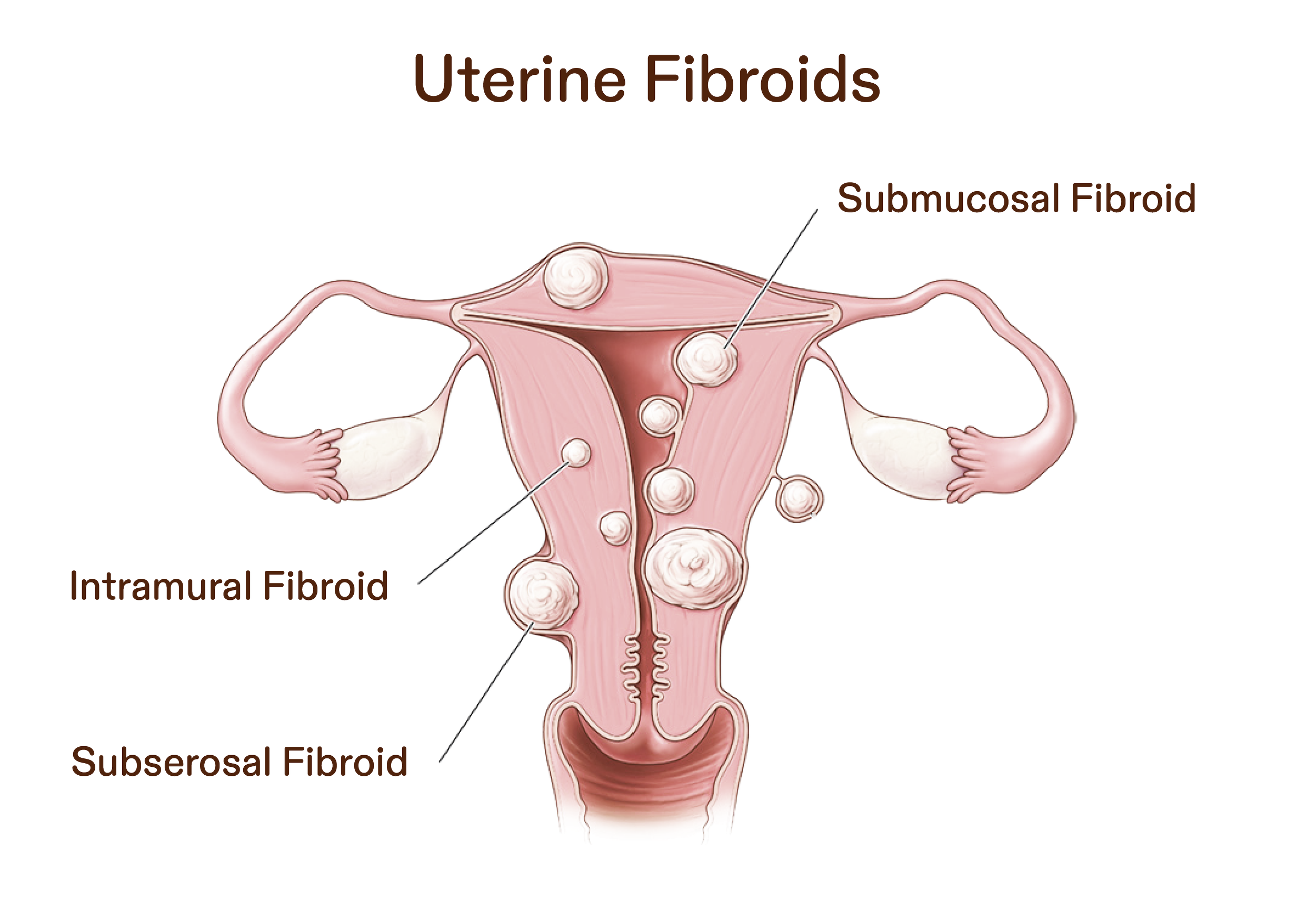
-
Grow into the cavity of the uterus. These commonly cause:
Heavy or prolonged menstrual bleeding
Fertility or pregnancy problems
These fibroids are often suitable for hysteroscopic removal.
-
Grow within the muscular wall of the uterus. They may cause:
Heavy bleeding
Pelvic pain or pressure
Uterine enlargement
Treatment depends on size, symptoms and fertility goals.
-
Grow on the outer surface of the uterus. These fibroids are more likely to cause:
Pelvic pressure
Bladder or bowel symptoms
Common fibroid symptoms
Not all fibroids cause symptoms. When symptoms do occur, they may include:
Heavy or prolonged menstrual bleeding
Pelvic pain or pressure
Abdominal bloating or fullness
Frequent urination or bowel symptoms
Pain during intercourse
Difficulty conceiving or pregnancy complications
Symptoms can worsen gradually over time.
How are fibroids diagnosed?
Fibroids are usually diagnosed using:
Pelvic ultrasound
MRI scans in selected cases
Imaging helps determine the size, number and location of fibroids and guides treatment planning.
Fibroid treatment options
Medical Management
Medical management refers to treatments that aim to control fibroid-related symptoms, particularly heavy menstrual bleeding, rather than remove fibroids themselves. These options may be appropriate for some women depending on symptoms, fibroid type, age and fertility goals.
Medical treatments do not eliminate fibroids, and symptoms may return once treatment is stopped. For this reason, medical management is often used as a temporary measure or as part of a broader treatment plan.
Medical treatment options
-
Hormonal therapies may help reduce heavy menstrual bleeding associated with fibroids.
These include:
Progesterone-based treatments, such as oral progesterone or intrauterine systems (Mirena)
Combined hormonal contraception in selected women
Hormonal treatments may improve bleeding but usually do not significantly reduce fibroid size.
-
These medications temporarily suppress ovarian hormone production and can:
Reduce fibroid size
Improve bleeding symptoms
They are typically used:
For short-term symptom control
Before surgery to reduce fibroid size or correct anaemia
Long-term use is limited due to menopausal-type side effects and bone health considerations.
-
Tranexamic acid may be used to:
Reduce heavy menstrual bleeding
Improve quality of life during periods
It does not affect fibroid size and is used only during menstruation.
Surgical Management
Why Minimally Invasive?
Minimally invasive fibroid surgery offers effective treatment for uterine fibroids while minimising recovery time and disruption to daily life. At the Auckland Fibroid Clinic, our specialist gynaecologists provide advanced keyhole surgical options tailored to each woman’s symptoms, fibroid type and reproductive goals.
Minimally invasive refers to surgical techniques that remove fibroids or the uterus using small incisions rather than traditional open surgery. These approaches are associated with:
Less postoperative pain
Shorter hospital stays (1-2 night admission)
Faster recovery and return to work
Reduced scarring
Not all fibroids require surgery, and not all women need the same operation. Our role is to help you understand your options and choose the most appropriate treatment.
Who is suitable?
Suitability depends on several factors, including:
Size, number and location of fibroids
Previous abdominal surgery
Symptoms and overall health
Fertility plans
We offer detailed imaging review and multidisciplinary discussion to determine the safest and most effective approach for each patient.
-
A myomectomy is the procedure to remove a fibroid while preserving the uterus. This option is often suitable for women who:
Wish to maintain fertility
Have symptoms such as heavy bleeding or pressure
Have fibroids that are suitable for keyhole removal
Laparoscopic myomectomy is performed through small abdominal incisions using specialised instruments and a camera.
-
A hysterectomy involves removal of the uterus and provides definitive treatment for fibroids. Minimally invasive hysterectomy may be recommended when:
Fibroid symptoms are severe
Fertility preservation is not required
Other treatments have been ineffective
Where appropriate, hysterectomy can be performed using keyhole techniques to reduce recovery time compared with open surgery.
Uterine Artery Embolisation
Uterine artery embolisation (UAE) is a well-established, minimally invasive treatment for fibroids. It has been refined over decades of clinical use worldwide and is backed by a substantial body of evidence — offering women effective, lasting symptom relief without the need for surgery.
The procedure is performed by an interventional radiologist through a tiny, needle-sized access point in the wrist — no abdominal incision required (see diagram). This radial approach means most women can sit up and move about again soon after the procedure. Using real-time imaging guidance, a thin catheter is directed to the arteries supplying the fibroids, and their blood supply is blocked, causing the fibroids to shrink and symptoms to ease over time.
Why consider UAE?
No abdominal incision and no removal of the uterus
Performed via the wrist, allowing quick mobilisation after the procedure
Typically done as a day case under conscious sedation, avoiding the risks of a general anaesthetic
A well-established option with a long track record of safety and effective symptom control
Preserves the uterus for women who wish to avoid hysterectomy
UAE may be appropriate for women who:
Have significant fibroid-related symptoms, such as heavy menstrual bleeding or pelvic pressure/bulk-related symptoms
Prefer a non-surgical option, or do not wish to undergo surgery, after counselling
Are not suitable surgical candidates due to medical comorbidities or increased anaesthetic risk
Have multiple fibroids where myomectomy would be complex or extensive, and hysterectomy is not desired
Wish to avoid hysterectomy
UAE does not remove the fibroids, but it provides good, durable symptom relief for most women. It can also be considered by women wishing to preserve fertility, though this requires careful individual discussion and counselling.
Lifestyle and Dietary support
Fertility
For women wishing to conceive, fibroid management requires careful planning. Our service includes fertility specialist input to assess how fibroids may affect pregnancy or IVF outcomes and to determine whether surgical removal may improve fertility while minimising risks.
Fibroids and Fertility
While many women with fibroids can conceive naturally, some fibroids—particularly those that distort the uterine cavity or block the fallopian tubes—can affect fertility or increase the risk of pregnancy complications.
Fibroids may contribute to:
Difficulty conceiving naturally
Recurrent miscarriage
Complications during pregnancy, such as preterm labour or malpresentation
Interference with IVF or other assisted reproductive techniques
-
Submucosal fibroids (grow into the uterine cavity) – most strongly associated with infertility and miscarriage
Large intramural fibroids (within the uterine wall) – may reduce implantation rates or interfere with uterine blood flow
Fibroids that distort the cavity or block the fallopian tubes – can prevent sperm or embryos from reaching the uterus
Fibroids located on the outer surface of the uterus (subserosal) usually do not affect fertility.
-
Hysteroscopic removal – ideal for submucosal fibroids; preserves the uterus and fertility
Laparoscopic myomectomy – removes intramural or subserosal fibroids while maintaining fertility
Medical management – usually temporary and does not improve fertility
Uterine artery embolisation – generally not recommended for women planning pregnancy due to potential effects on uterine blood supply
Your gynaecologist will help you choose the treatment that maximises fertility while relieving symptoms.
Fibroids and Pregnancy
-
Many women with fibroids have healthy pregnancies, but fibroids can sometimes increase the risk of complications depending on their size, number, and location.
Potential effects include:
Miscarriage – particularly with submucosal fibroids (inside the uterine cavity)
Preterm labour – fibroids may contribute to early contractions or uterine irritability
Fetal growth restriction – large fibroids can reduce space for the developing baby
Abnormal fetal position – may make vaginal birth more difficult
Placental complications – including placental abruption or malposition
Pain during pregnancy – fibroids may grow due to hormonal changes, causing discomfort or pressure
-
Most fibroids do not require treatment during pregnancy
Pain can sometimes be managed with paracetamol or gentle lifestyle measures
Surgery during pregnancy is rare and reserved for complications such as severe pain or fibroid degeneration
Women with fibroids are typically monitored closely with ultrasound to check growth, placental position, and fetal development
-
Removing fibroids before conception can improve outcomes, especially for submucosal or large intramural fibroids
Hysteroscopic or laparoscopic myomectomy is preferred for fertility preservation
Women who have had UAE may need careful fertility counselling, as pregnancy outcomes can be affected
-
At the Auckland Fibroid Centre, women with fibroids who are planning pregnancy or already pregnant are assessed by:
Specialist gynaecologists – experienced in minimally invasive fibroid surgery
Fertility specialists – to optimise conception and pregnancy planning
Multidisciplinary support – including imaging, dietetics, and specialist nursing
The goal is to ensure the safest possible pregnancy while managing fibroids effectively.
-
Fibroids can sometimes interfere with fertility and the success of in vitro fertilisation (IVF), particularly when they distort the uterine cavity or reduce implantation chances.
Women undergoing IVF may be recommended fibroid removal if they have:
Submucosal fibroids – grow into the uterine cavity and significantly reduce implantation and pregnancy rates
Large intramural fibroids – can slightly reduce IVF success if they distort the cavity or reduce uterine blood flow
Fibroids causing symptoms – such as heavy bleeding or pain, which could complicate IVF treatment
Fibroids located on the outer surface of the uterus (subserosal) usually do not affect IVF outcomes and may not require removal.
-
Hysteroscopic myomectomy – ideal for submucosal fibroids; performed through the vagina and cervix without abdominal incisions
Laparoscopic myomectomy – used for intramural or subserosal fibroids; minimally invasive abdominal surgery preserves the uterus
Open myomectomy – rarely required, reserved for very large or complex fibroids
The choice of procedure depends on:
Fibroid size, number, and location
Fertility goals and previous IVF history
Specialist assessment and imaging
-
Increases the chance of implantation and pregnancy for women with cavity-distorting fibroids
Reduces the risk of miscarriage associated with submucosal fibroids
Preserves fertility while relieving symptoms of heavy bleeding or pain
Multidisciplinary approach
At the Auckland Fibroid Centre, women considering IVF are assessed by:
A specialist gynaecologist with experience in minimally invasive fibroid surgery
A fertility specialist to coordinate IVF planning
A multidisciplinary team, including imaging and nursing support
This ensures that treatment is individualised, evidence-based, and aligned with IVF goals.